Head-to-head comparison · Portable Power Stations
EcoFlow DELTA 3 vs DELTA 3 Plus
Both store 1,024 Wh of LiFePO4, put out 1,800 W with a 3,600 W surge, recharge in 56 minutes and carry a 5-year warranty. The Plus doubles the solar input to 1,000 W through two inputs.
By Watt Versus Editorial· Updated
This page was drafted with AI assistance from manufacturers' specs and manuals, and is checked by our editor.
Why the EcoFlow DELTA 3 Plus Portable Power Station wins
The DELTA 3 Plus takes twice the solar and lists a sub-10 ms switchover and two 140 W USB-C ports, for the same weight. The DELTA 3 is the one to buy if you will only ever use a small solar panel.
Prices change often. Check the current price and availability on Amazon.
Check Latest Price on Amazon (paid link)EcoFlow DELTA 3 Portable Power Station (1,024 Wh)
A 1,024 Wh LiFePO4 station with 1,800 W AC output, a 56-minute wall recharge, 500 W solar input and about 5 kWh of expansion.
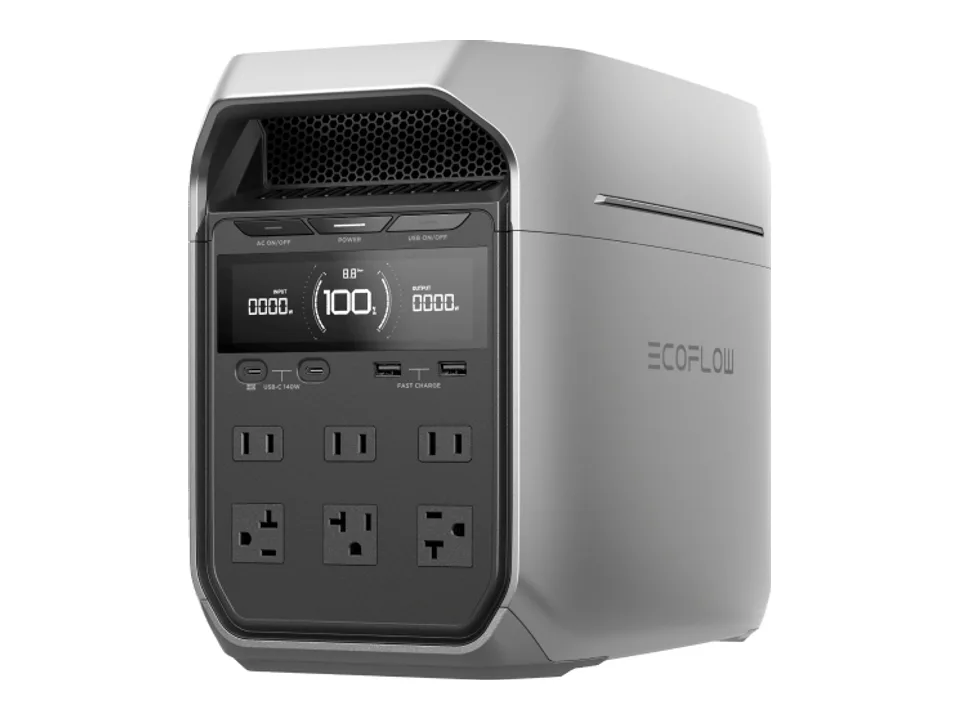
EcoFlow DELTA 3 Plus Portable Power Station
A 1,024 Wh LiFePO4 station with 1,800 W of AC output, a 56-minute wall recharge, 1,000 W of solar input and room to grow to 5 kWh.
Side-by-side
Specs compared
| Specification | EcoFlow DELTA 3 Portable Power Station (1,024 Wh) | EcoFlow DELTA 3 Plus Portable Power StationOur pick |
|---|---|---|
| Editorial score | Editorial score:8.3/10 | Editorial score:8.8/10 |
| Best for | Expandable 1 kWh DELTA with 500 W Solar | Best 1 kWh Overall |
| Capacity | 1,024 Wh | 1,024 Wh |
| Battery chemistry | LiFePO4 (LFP) | LiFePO4 (LFP) |
| Rated cycle life | 4,000 cycles to 80% capacity | 4,000 cycles to 80% capacity |
| AC output | 1,800 W | 1,800 W (2,200 W with X-Boost) |
| Peak output | 3,600 W surge | 3,600 W surge |
| Wall recharge | 0-100% in 56 minutes (1,500 W AC input) | 0-100% in 56 minutes (1,500 W AC input) |
| Max solar input | 500 W (11-60 V) | 1,000 W (2 x 500 W MPPT) |
| Expandable to | About 5 kWh with extra batteries, per EcoFlow | About 5 kWh with DELTA 3, DELTA 2 or DELTA 2 Max extra batteries |
| Weight | 27.6 lb (12.5 kg) | 27.6 lb (12.5 kg) |
| Dimensions | 15.7 x 7.9 x 11.2 in (398 x 200 x 284 mm) | 15.7 x 8 x 11.2 in |
| Warranty | 5 years | 5 years |
| AC outlets | — | 6 (US model) |
| USB-C output | — | 2 x 140 W |
| Backup switchover | — | Under 10 ms |
| Where to buy | Check Latest Price on Amazon (paid link) | Check Latest Price on Amazon (paid link) |
Scroll sideways to see both columns →
How long it runs: estimated hours
Estimates use 80% of the rated capacity as usable energy, after inverter losses and battery reserve (see our sizing guide). Draws are typical figures; check the label on your own device.
| Device (typical draw) | EcoFlow DELTA 3 Portable Power Station (1,024 Wh) | EcoFlow DELTA 3 Plus Portable Power Station |
|---|---|---|
| Wi-Fi router (10 W) | about 82 h | about 82 h |
| CPAP without humidifier (40 W) | about 20 h | about 20 h |
| Laptop (60 W) | about 14 h | about 14 h |
| Full-size fridge, average (68 W) | about 12 h | about 12 h |
| Box fan (75 W) | about 11 h | about 11 h |
| 55-inch LED TV (100 W) | about 8.2 h | about 8.2 h |
At a glance
Key differences
- 1Max solar input: 500 W vs 1,000 W (2 x 500 W)
- 2Backup switchover: not confirmed vs under 10 ms
- 3USB-C output: not confirmed vs 2 x 140 W
- 4Weight: 27.6 lb vs 27.6 lb
- 5Cycle life: 4,000 to 80% for both
Product by product
Pros and cons
EcoFlow DELTA 3 Portable Power Station (1,024 Wh)
A solid 1 kWh EcoFlow for home backup and camping if 500 W of solar is enough. If you plan a bigger solar array, the DELTA 3 Plus takes twice the input.
Pros
- 56-minute full recharge from a wall outlet at 1,500 W, by EcoFlow
- 4,000 cycles to 80% capacity, the same rating as the DELTA 3 Plus and Anker C1000 Gen 2
- Expands to about 5 kWh with extra batteries
- 5-year warranty
Cons
- Half the solar input of the DELTA 3 Plus: 500 W against 1,000 W
- 27.6 lb, heavier than the 23.8 lb Jackery Explorer 1000 v2
- We could not confirm the US outlet count or USB-C wattage on EcoFlow's pages
EcoFlow DELTA 3 Plus Portable Power Station
The most complete 1 kWh station we cover: fast to recharge, strong on solar, and expandable when you need more. Pick it unless weight or a lower budget matters more.
Pros
- 4,000-cycle LFP rating, a step up from the DELTA 2's 3,000
- Full recharge from a wall outlet in 56 minutes, by EcoFlow's figures
- 1,000 W of solar input, double the DELTA 2
- Two 140 W USB-C ports charge most laptops at full speed
Cons
- At 27.6 lb it is heavier than the Jackery Explorer 1000 v2 and Anker SOLIX C1000 Gen 2
- Reaching 5 kWh needs extra batteries, sold separately
- X-Boost runs high-wattage heaters and kettles at reduced power, not at their full rating
Choose the DELTA 3 Plus if
- You plan to charge from more than 500 W of panels.
- You want a confirmed sub-10 ms UPS switchover for a router or CPAP.
Choose the DELTA 3 if
- A single small panel or the wall is all you will use.
- You find it for less in a sale.
Both expand to about 5 kWh with extra batteries. For other 1 kWh picks, see the best 1,000 Wh power stations.
Frequently asked questions
- Is the DELTA 3 Plus worth it over the DELTA 3?
- If you use solar, yes: it takes 1,000 W against 500 W. Capacity, AC output and recharge time are the same.
- Do the DELTA 3 and DELTA 3 Plus weigh the same?
- Yes, 12.5 kg (27.6 lb) each, by EcoFlow.
Sources
The specifications and claims on this page come from these manufacturer documents. Figures are the manufacturers' own unless the text says otherwise.
More comparisons
VS comparison
EcoFlow DELTA 3 Portable Power Station (1,024 Wh) vs EcoFlow DELTA 2 Portable Power Station
Both store 1,024 Wh of LiFePO4 and put out 1,800 W with 500 W of solar input and a 5-year warranty. The DELTA 3 recharges faster, has a higher surge and cycle rating, and expands further.
Updated November 12, 2026
VS comparison
EcoFlow DELTA 3 1500 Portable Power Station (1,536 Wh) vs EcoFlow DELTA 3 Plus Portable Power Station
Two DELTA 3 models with 1,800 W of AC output and a 3,600 W surge. The 1500 stores 50% more energy; the Plus takes twice the solar, lists more cycles and a faster switchover, and weighs less.
Updated November 12, 2026
VS comparison
Jackery Explorer 1000 v2 Portable Power Station vs EcoFlow DELTA 3 Portable Power Station (1,024 Wh)
Two of the most searched 1 kWh stations. The Jackery is lighter with slightly more capacity; the EcoFlow has more AC output, a higher surge and can add batteries.
Updated November 12, 2026