Head-to-head comparison · Portable Power Stations
Jackery Explorer 1000 v2 vs EcoFlow DELTA 3
Two of the most searched 1 kWh stations. The Jackery is lighter with slightly more capacity; the EcoFlow has more AC output, a higher surge and can add batteries.
By Watt Versus Editorial· Updated
This page was drafted with AI assistance from manufacturers' specs and manuals, and is checked by our editor.
Why the EcoFlow DELTA 3 Portable Power Station (1,024 Wh) wins
The DELTA 3 runs bigger loads (1,800 W against 1,500 W, with a 3,600 W surge), expands to about 5 kWh and is rated 4,000 cycles to 80% rather than to 70%. Choose the Jackery if you carry it often: it is 3.8 lb lighter.
Prices change often. Check the current price and availability on Amazon.
Check Latest Price on Amazon (paid link)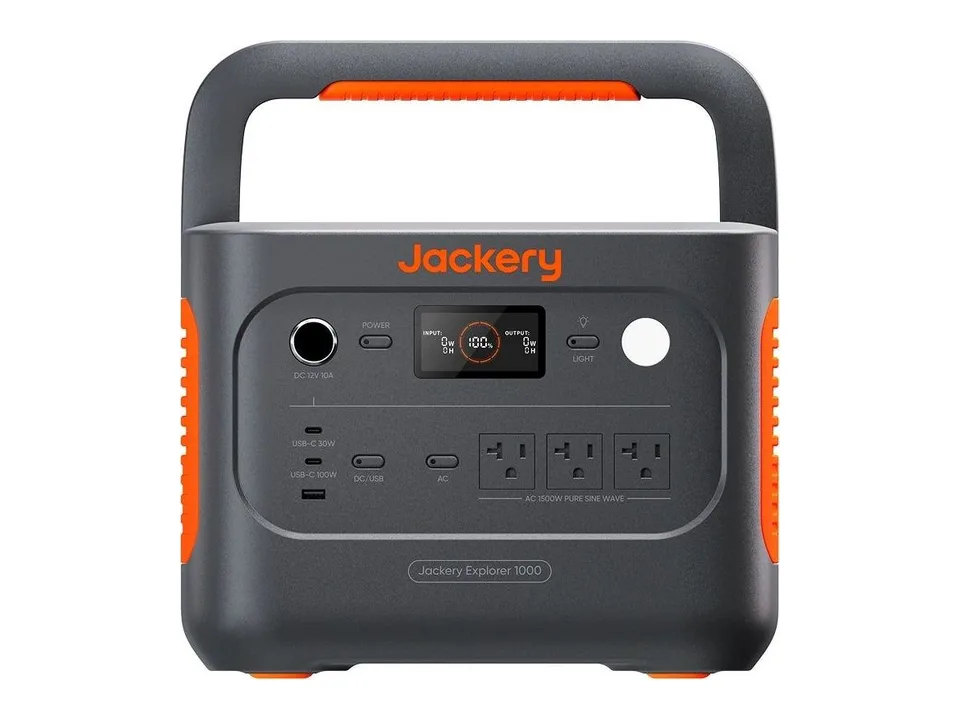
Jackery Explorer 1000 v2 Portable Power Station
A 1,070 Wh LiFePO4 station with 1,500 W of AC output, a one-hour emergency recharge and the lowest weight in its class.
EcoFlow DELTA 3 Portable Power Station (1,024 Wh)
A 1,024 Wh LiFePO4 station with 1,800 W AC output, a 56-minute wall recharge, 500 W solar input and about 5 kWh of expansion.
Side-by-side
Specs compared
| Specification | Jackery Explorer 1000 v2 Portable Power Station | EcoFlow DELTA 3 Portable Power Station (1,024 Wh)Our pick |
|---|---|---|
| Editorial score | Editorial score:8.1/10 | Editorial score:8.3/10 |
| Best for | Lightest 1 kWh Station | Expandable 1 kWh DELTA with 500 W Solar |
| Capacity | 1,070 Wh | 1,024 Wh |
| Battery chemistry | LiFePO4 (LFP) | LiFePO4 (LFP) |
| Rated cycle life | 4,000 cycles to 70% capacity | 4,000 cycles to 80% capacity |
| AC output | 1,500 W | 1,800 W |
| Peak output | 3,000 W surge | 3,600 W surge |
| USB-C output | 2 x up to 100 W | — |
| Wall recharge | 0-100% in about 1 hour in Emergency Super Charging mode | 0-100% in 56 minutes (1,500 W AC input) |
| Expandable to | Not expandable | About 5 kWh with extra batteries, per EcoFlow |
| Weight | 23.8 lb (10.8 kg) | 27.6 lb (12.5 kg) |
| Dimensions | 12.9 x 8.8 x 9.7 in | 15.7 x 7.9 x 11.2 in (398 x 200 x 284 mm) |
| Warranty | 3 years, plus a 2-year extension on purchases from Jackery's own website | 5 years |
| Max solar input | — | 500 W (11-60 V) |
| Where to buy | Check Latest Price on Amazon (paid link) | Check Latest Price on Amazon (paid link) |
Scroll sideways to see both columns →
How long it runs: estimated hours
Estimates use 80% of the rated capacity as usable energy, after inverter losses and battery reserve (see our sizing guide). Draws are typical figures; check the label on your own device.
| Device (typical draw) | Jackery Explorer 1000 v2 Portable Power Station | EcoFlow DELTA 3 Portable Power Station (1,024 Wh) |
|---|---|---|
| Wi-Fi router (10 W) | about 86 h | about 82 h |
| CPAP without humidifier (40 W) | about 21 h | about 20 h |
| Laptop (60 W) | about 14 h | about 14 h |
| Full-size fridge, average (68 W) | about 13 h | about 12 h |
| Box fan (75 W) | about 11 h | about 11 h |
| 55-inch LED TV (100 W) | about 8.6 h | about 8.2 h |
At a glance
Key differences
- 1Capacity: 1,070 Wh vs 1,024 Wh
- 2AC output: 1,500 W vs 1,800 W
- 3Peak output: 3,000 W vs 3,600 W surge
- 4Expandable: no vs about 5 kWh
- 5Weight: 23.8 lb vs 27.6 lb
Product by product
Pros and cons
Jackery Explorer 1000 v2 Portable Power Station
Buy it to carry: it is the lightest 1 kWh station here and charges in an hour. If you need to run 1,800 W appliances or want a battery later, look at the EcoFlow DELTA 3 Plus.
Pros
- 23.8 lb, the lightest 1 kWh station we cover
- Slightly more capacity than the 1,024 Wh rivals
- One-hour recharge in Emergency Super Charging mode
- Two 100 W USB-C ports
Cons
- 1,500 W of AC output is the lowest of the 1 kWh group
- Cycle life is rated to 70% capacity, where EcoFlow and Anker rate theirs to 80%
- Not expandable
- The extra two years of warranty apply only when bought from Jackery directly, not from Amazon
EcoFlow DELTA 3 Portable Power Station (1,024 Wh)
A solid 1 kWh EcoFlow for home backup and camping if 500 W of solar is enough. If you plan a bigger solar array, the DELTA 3 Plus takes twice the input.
Pros
- 56-minute full recharge from a wall outlet at 1,500 W, by EcoFlow
- 4,000 cycles to 80% capacity, the same rating as the DELTA 3 Plus and Anker C1000 Gen 2
- Expands to about 5 kWh with extra batteries
- 5-year warranty
Cons
- Half the solar input of the DELTA 3 Plus: 500 W against 1,000 W
- 27.6 lb, heavier than the 23.8 lb Jackery Explorer 1000 v2
- We could not confirm the US outlet count or USB-C wattage on EcoFlow's pages
Choose the EcoFlow DELTA 3 if
- You run kitchen appliances or tools near 1,800 W.
- You may add batteries for longer outages.
Choose the Jackery Explorer 1000 v2 if
- You camp and carry it: 23.8 lb, the lightest 1 kWh station we cover.
More in the best 1,000 Wh power stations.
Frequently asked questions
- Is the Jackery 1000 v2 lighter than the EcoFlow DELTA 3?
- Yes, 23.8 lb against 27.6 lb, by their makers.
- Which can be expanded?
- The EcoFlow DELTA 3, to about 5 kWh. Jackery lists the 1000 v2 as not expandable.
Sources
The specifications and claims on this page come from these manufacturer documents. Figures are the manufacturers' own unless the text says otherwise.
More comparisons
VS comparison
EcoFlow DELTA 3 Portable Power Station (1,024 Wh) vs EcoFlow DELTA 2 Portable Power Station
Both store 1,024 Wh of LiFePO4 and put out 1,800 W with 500 W of solar input and a 5-year warranty. The DELTA 3 recharges faster, has a higher surge and cycle rating, and expands further.
Updated November 12, 2026
VS comparison
BLUETTI AC180 Portable Power Station vs EcoFlow DELTA 3 Portable Power Station (1,024 Wh)
Two 1,800 W LiFePO4 stations with 500 W of solar input and 5-year warranties. The BLUETTI stores a little more; the EcoFlow is 7.7 lb lighter, recharges fully in under an hour and is rated for more cycles.
Updated November 12, 2026
VS comparison
Anker SOLIX C1000 Gen 2 Portable Power Station vs EcoFlow DELTA 3 Portable Power Station (1,024 Wh)
Two 1,024 Wh LiFePO4 stations rated for 4,000 cycles to 80%. The Anker puts out more power, recharges faster and is lighter; the EcoFlow can add batteries.
Updated November 12, 2026