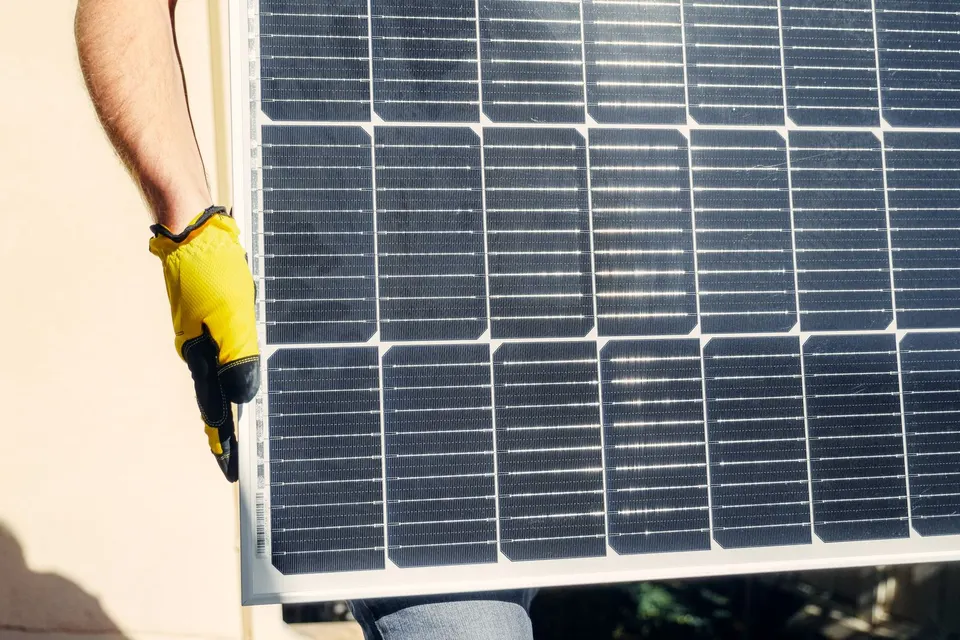
Choose a portable solar panel by what it will charge. A panel without a charge controller is made to plug into a power station, which has its own controller. A kit with a controller can charge a 12V battery directly. The models we cover:
Match the voltage to your power station
Every power station lists a solar input voltage range. A panel's open-circuit voltage (Voc) must stay inside that range; power station makers warn against exceeding the maximum. For example, the BLUETTI Elite 30 V2 accepts 12-28 V, which the Renogy panels' 24.3 V fits but the EcoFlow 400W's 48 V does not. Larger stations such as the Anker SOLIX C1000 Gen 2 (60 V max) accept both.
Rated watts are a lab figure
Makers rate panels at standard test conditions: 1,000 W of sunlight per square meter at 25 degrees C. Real output is usually lower, and EcoFlow's manual notes that hot panels produce less. Our power station sizing guide explains how solar input affects recharge time.
Compare models in Renogy 200W suitcase vs EcoFlow 400W and EcoFlow NextGen 220W vs 400W, or see the best portable solar panels.