Best of · Portable Power Stations
Best 1,000 Wh Portable Power Stations
Seven 1 kWh stations ranked on the manufacturers' numbers: output, cycle life, wall and solar recharge, expansion and weight.
By Watt Versus Editorial· Updated · 7 picks
This page was drafted with AI assistance from manufacturers' specs and manuals, and is checked by our editor.
The short list
| # | Product | Key feature | Pros / Cons | Buy |
|---|---|---|---|---|
| 1 | EcoFlow DELTA 3 Plus Portable Power StationBest OverallEditorial score:8.8/10 | A 1,024 Wh LiFePO4 station with 1,800 W of AC output, a 56-minute wall recharge, 1,000 W of solar input and room to grow to 5 kWh. |
| View on Amazon (paid link) |
| 2 | Anker SOLIX C1000 Gen 2 Portable Power StationFastest RechargeEditorial score:8.6/10 | A 1,024 Wh station with 2,000 W of AC output and a 49-minute wall recharge in a 24.9 lb body. |
| View on Amazon (paid link) |
| 3 | BLUETTI Elite 100 V2 Portable Power StationBest for SolarEditorial score:8.4/10 | A compact 1,024 Wh LiFePO4 station with 1,800 W of AC output, 1,000 W of solar input and a 10 ms UPS switchover. |
| View on Amazon (paid link) |
| 4 | Anker SOLIX C1000 Portable Power StationExpandable Anker PickEditorial score:8.4/10 | A 1,056 Wh LiFePO4 station with six AC outlets, 1,800 W of output and a full recharge in under an hour. |
| View on Amazon (paid link) |
| 5 | BLUETTI AC180 Portable Power StationMost Starting CapacityEditorial score:8.2/10 | A 1,152 Wh LiFePO4 station with 1,800 W of AC output, cells rated for 3,500+ cycles and a wireless charging pad on top. |
| View on Amazon (paid link) |
| 6 | Jackery Explorer 1000 v2 Portable Power StationLightestEditorial score:8.1/10 | A 1,070 Wh LiFePO4 station with 1,500 W of AC output, a one-hour emergency recharge and the lowest weight in its class. |
| View on Amazon (paid link) |
| 7 | EcoFlow DELTA 2 Portable Power StationExpandable Older ModelEditorial score:8.0/10 | A 1,024 Wh LiFePO4 power station with 1,800 W of AC output that can grow to about 3 kWh with an extra battery. |
| View on Amazon (paid link) |
Why 1 kWh is the popular size
About 1 kWh is the most capacity that one person can still carry comfortably, and enough to run a fridge for several hours, a CPAP machine for a few nights or a laptop for days. Every station here uses LiFePO4 cells and outputs at least 1,500 W.
How we ranked them
We scored each station against the others on the criteria in our About page: capacity for the weight, output, cycle rating, recharge speed from the wall and from solar, ports and expansion, and warranty. Price is not part of the score because we do not show prices; check the current price on Amazon before you decide.
Our picks in detail
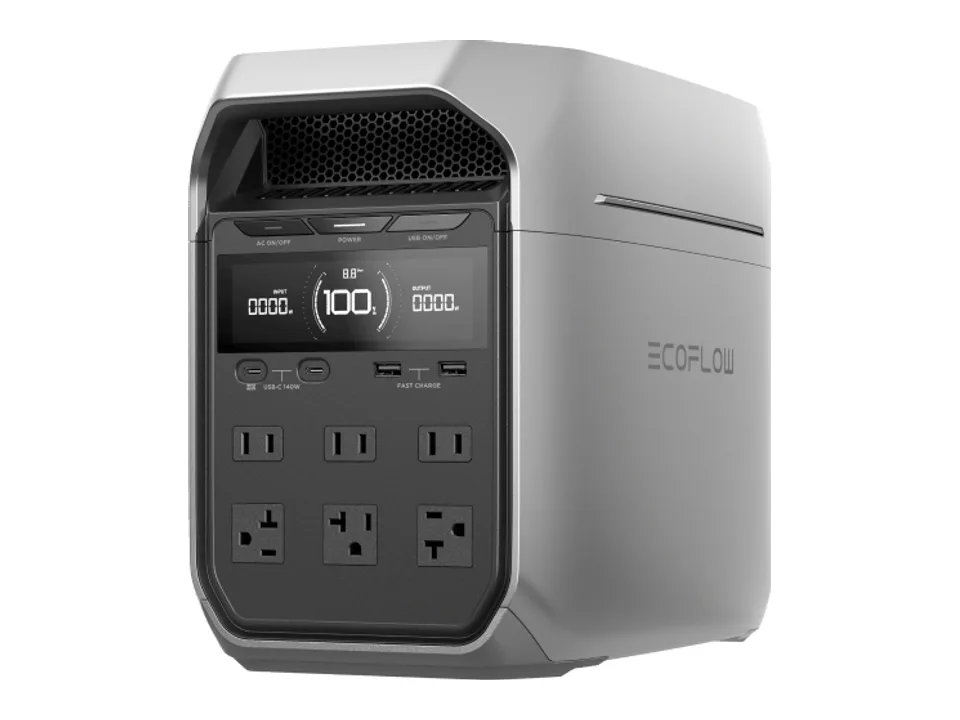
EcoFlow DELTA 3 Plus Portable Power Station
EcoFlow · DELTA 3 Plus
The best balance in the group: 1,000 W of solar, a 56-minute recharge, 4,000-cycle cells and expansion to 5 kWh.
- Capacity
- 1,024 Wh
- Battery chemistry
- LiFePO4 (LFP)
- Rated cycle life
- 4,000 cycles to 80% capacity
- AC output
- 1,800 W (2,200 W with X-Boost)
- Peak output
- 3,600 W surge
- AC outlets
- 6 (US model)
Pros
- 4,000-cycle LFP rating, a step up from the DELTA 2's 3,000
- Full recharge from a wall outlet in 56 minutes, by EcoFlow's figures
- 1,000 W of solar input, double the DELTA 2
- Two 140 W USB-C ports charge most laptops at full speed
Cons
- At 27.6 lb it is heavier than the Jackery Explorer 1000 v2 and Anker SOLIX C1000 Gen 2
- Reaching 5 kWh needs extra batteries, sold separately
- X-Boost runs high-wattage heaters and kettles at reduced power, not at their full rating
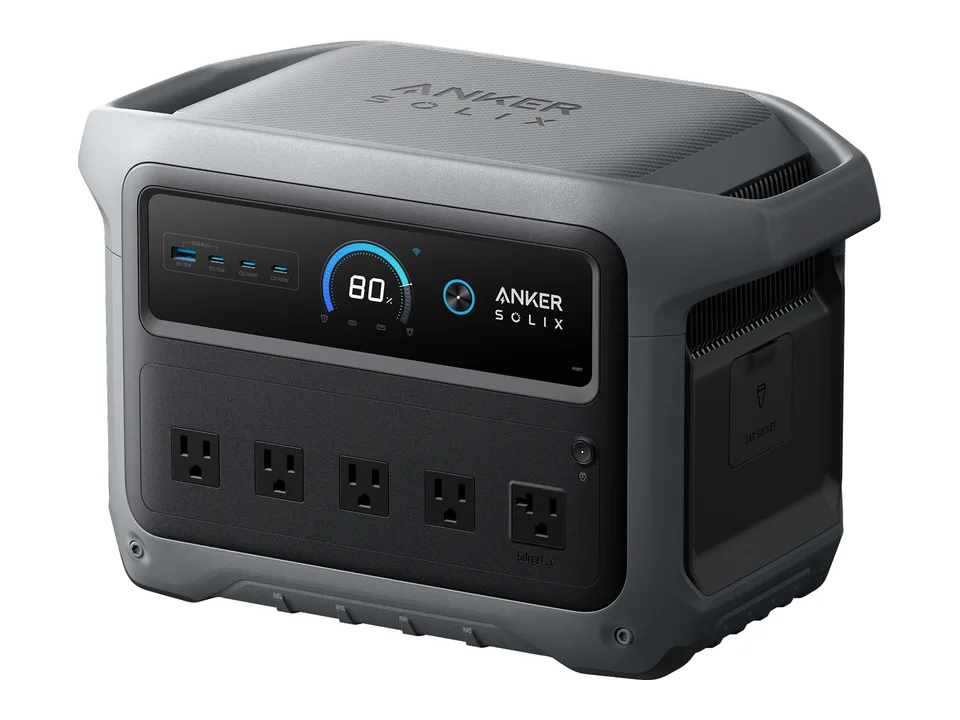
Anker SOLIX C1000 Gen 2 Portable Power Station
Anker · SOLIX C1000 Gen 2 (A1763)
The most output (2,000 W) and the fastest wall recharge (49 minutes), in a 24.9 lb body. Not expandable.
- Capacity
- 1,024 Wh
- Battery chemistry
- LiFePO4 (LFP)
- Rated cycle life
- 4,000 cycles to 80% capacity
- AC output
- 2,000 W
- Peak output
- 3,000 W
- USB-C output
- 1 x 140 W, 1 x 15 W
Pros
- 2,000 W of continuous AC output, the highest of the 1 kWh stations we cover
- Fastest wall recharge in this group: 49 minutes with UltraFast charging
- 24.9 lb, almost 3 lb lighter than the EcoFlow DELTA 3 Plus
- 4,000-cycle LFP rating
Cons
- No expansion battery: 1,024 Wh is all you get
- Solar input stops at 600 W
- Only one fast USB-C port; the second is rated at 15 W
- UltraFast charging has to be switched on in the Anker app
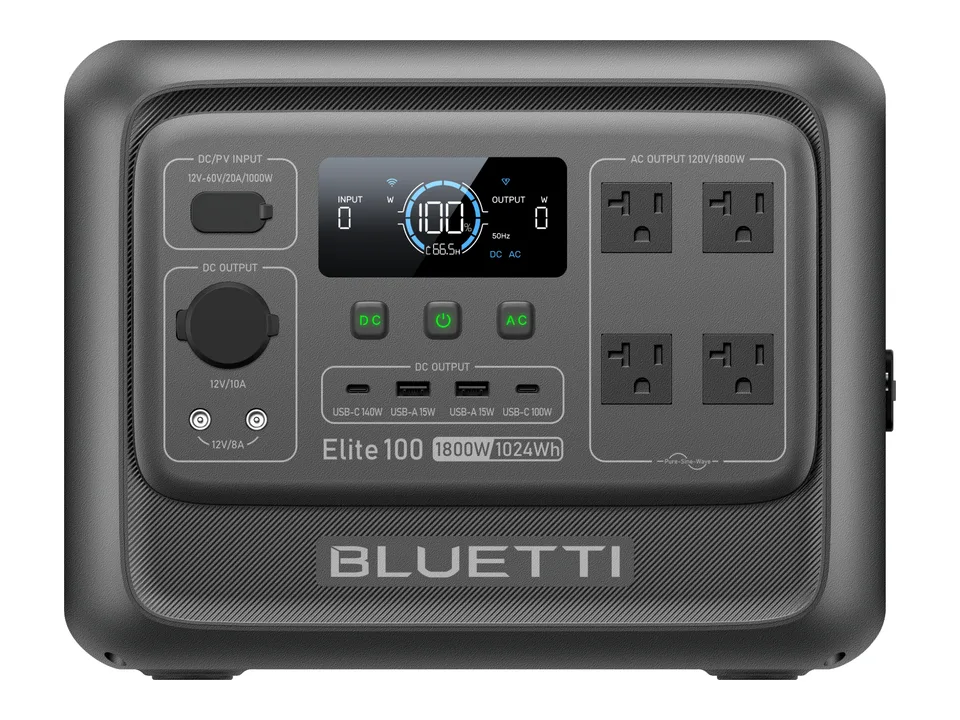
BLUETTI Elite 100 V2 Portable Power Station
BLUETTI · Elite 100 V2
1,000 W of solar input, two fast USB-C ports and a 5-year warranty in a compact 25.3 lb case.
- Capacity
- 1,024 Wh
- Battery chemistry
- LiFePO4 (LFP)
- Rated cycle life
- 4,000+ cycles to 80% capacity
- AC output
- 1,800 W
- Peak output
- 2,700 W in Power Lifting mode
- USB-C output
- 1 x 140 W, 1 x 100 W
Pros
- 1,000 W of solar input in a 25.3 lb body
- Two fast USB-C ports: 140 W and 100 W
- 10 ms UPS switchover
- 5-year warranty
Cons
- Combined AC and solar charging is capped at 1,200 W, so the two inputs do not add up
- Power Lifting runs heating appliances at reduced power, not at their full rating
- Wall recharge is slower than the Anker C1000 Gen 2 and EcoFlow DELTA 3 Plus
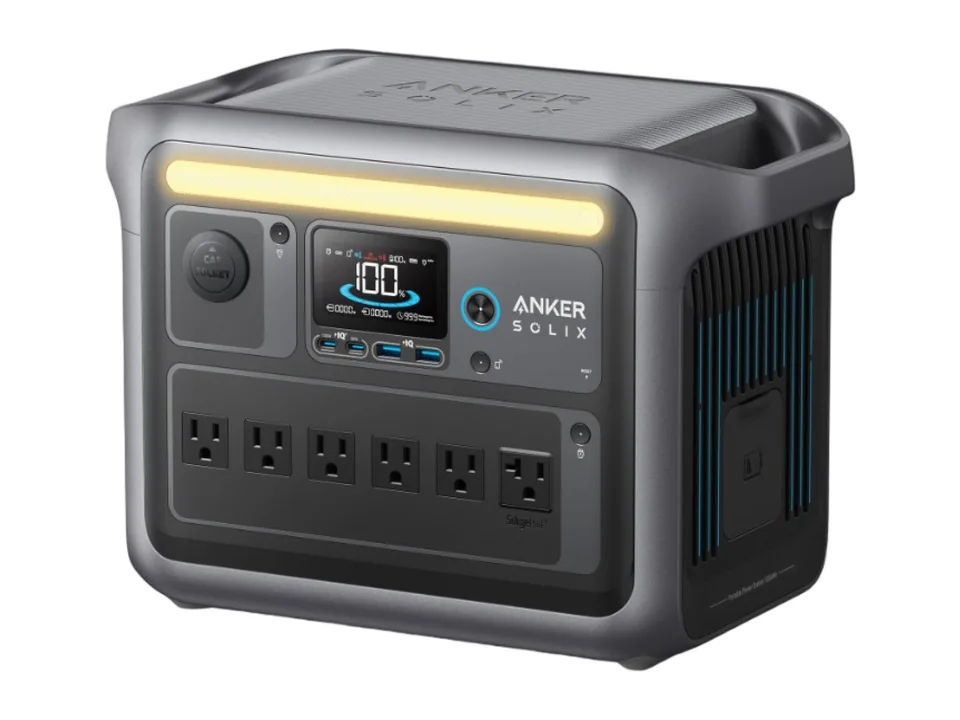
Anker SOLIX C1000 Portable Power Station
Anker · SOLIX C1000 (A1761)
Still a sound choice if you want to expand to 2,112 Wh, with an 80% recharge in 43 minutes.
- Capacity
- 1,056 Wh
- Battery chemistry
- LiFePO4 (LFP)
- Rated cycle life
- 3,000 cycles to 80% capacity
- AC output
- 1,800 W
- Peak output
- 2,400 W surge
- AC outlets
- 6
Pros
- Full wall recharge in under an hour, by Anker's figures
- 600 W of solar input, the highest of the 1 kWh models we cover
- Six AC outlets and a published switchover time of under 20 ms
- 5-year warranty and cells rated for 3,000 cycles
Cons
- This is the first-generation C1000: Anker now also sells a C1000 Gen 2 with different specifications
- Only one of the two USB-C ports delivers 100 W; the other is limited to 30 W
- Expansion stops at 2,112 Wh, less headroom than the EcoFlow DELTA 2
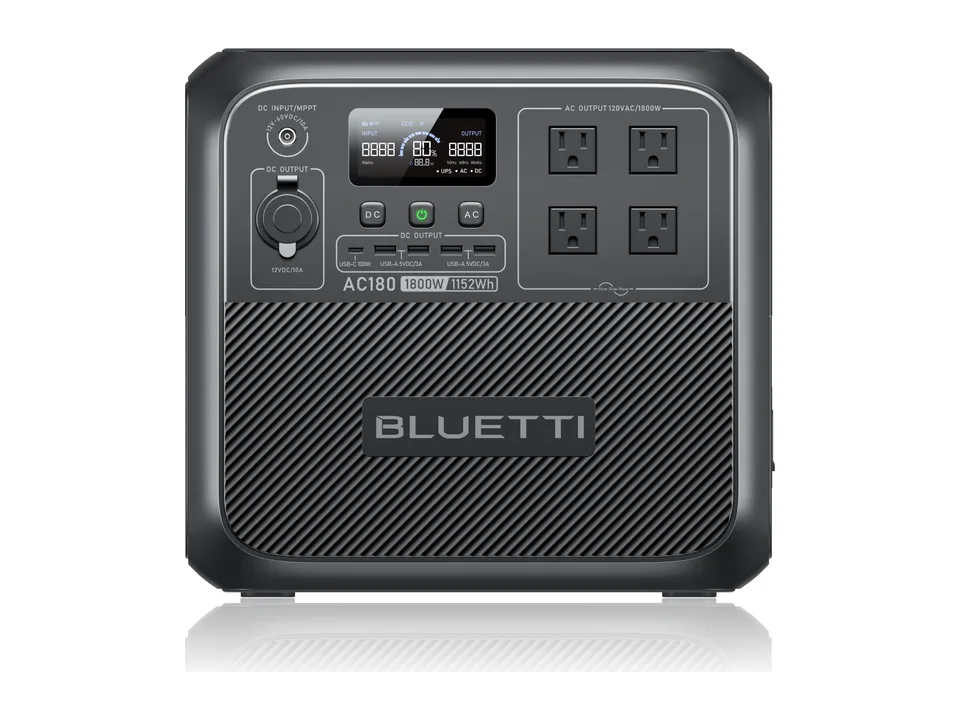
BLUETTI AC180 Portable Power Station
BLUETTI · AC180
1,152 Wh and expansion to about 4.2 kWh, at the cost of a heavier 35.3 lb body.
- Capacity
- 1,152 Wh
- Battery chemistry
- LiFePO4 (LFP)
- Rated cycle life
- 3,500+ cycles
- AC output
- 1,800 W
- Peak output
- 2,700 W in Power Lifting mode
- AC outlets
- 4
Pros
- The largest capacity of the 1 kWh models we cover, at 1,152 Wh
- Cells rated for 3,500+ cycles, with a 5-year warranty
- Charges to 80% in 45 minutes from a wall outlet
- Wireless charging pad for phones on the top panel
Cons
- The heaviest in its class: BLUETTI lists 35.3 lb in its table and 37 lb elsewhere on the same page
- Four AC outlets, where the Anker SOLIX C1000 has six
- We could not find a backup switchover time on BLUETTI's product page
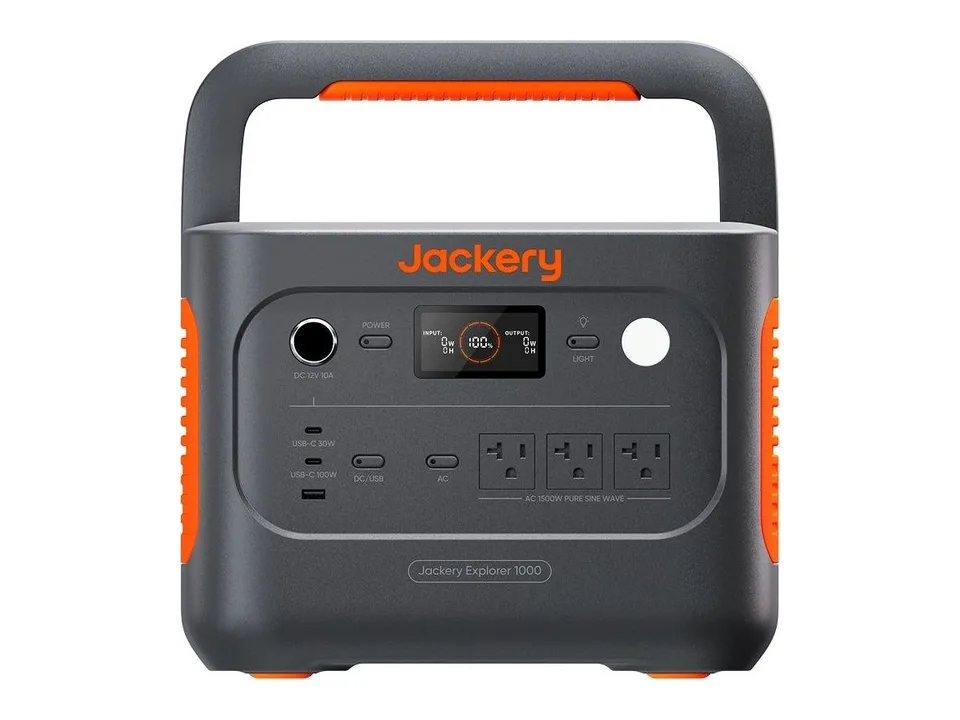
Jackery Explorer 1000 v2 Portable Power Station
Jackery · Explorer 1000 v2 (JE-1000D)
The lightest here at 23.8 lb, with a one-hour emergency recharge; output stops at 1,500 W.
- Capacity
- 1,070 Wh
- Battery chemistry
- LiFePO4 (LFP)
- Rated cycle life
- 4,000 cycles to 70% capacity
- AC output
- 1,500 W
- Peak output
- 3,000 W surge
- USB-C output
- 2 x up to 100 W
Pros
- 23.8 lb, the lightest 1 kWh station we cover
- Slightly more capacity than the 1,024 Wh rivals
- One-hour recharge in Emergency Super Charging mode
- Two 100 W USB-C ports
Cons
- 1,500 W of AC output is the lowest of the 1 kWh group
- Cycle life is rated to 70% capacity, where EcoFlow and Anker rate theirs to 80%
- Not expandable
- The extra two years of warranty apply only when bought from Jackery directly, not from Amazon
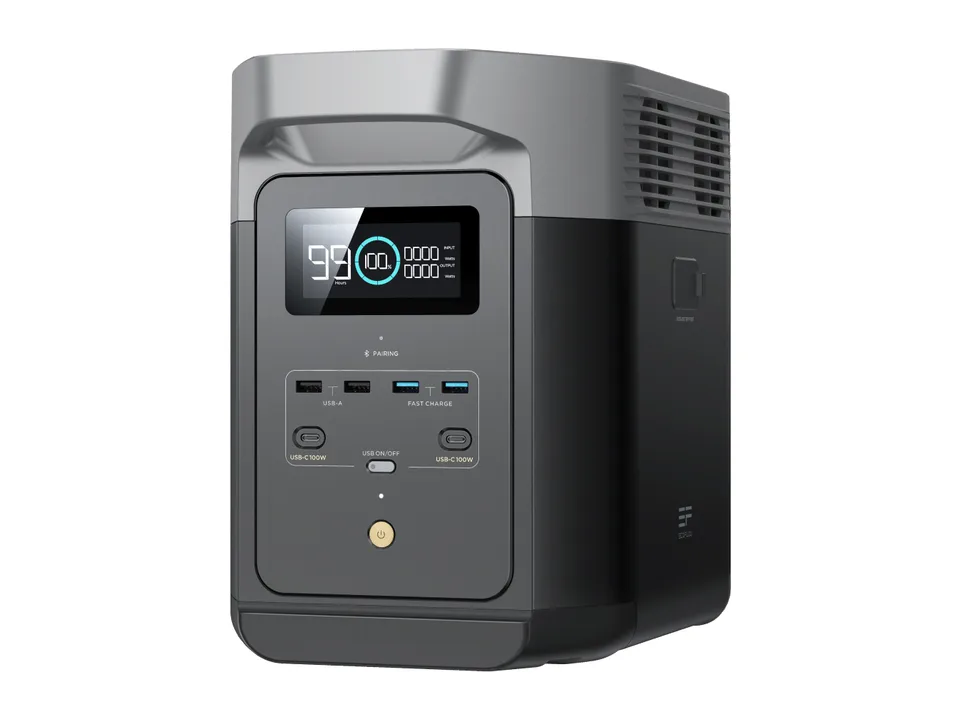
EcoFlow DELTA 2 Portable Power Station
EcoFlow · DELTA 2
1,800 W and room to grow to about 3 kWh; the DELTA 3 Plus improves on it in most respects.
- Capacity
- 1,024 Wh
- Battery chemistry
- LiFePO4 (LFP)
- Rated cycle life
- 3,000+ cycles to 80% capacity
- AC output
- 1,800 W
- Peak output
- 2,700 W surge
- Wall recharge
- 0-80% in 50 minutes, full in 80 minutes (EcoFlow lab figures)
Pros
- Charges from a wall outlet to 80% in 50 minutes, by EcoFlow's figures
- Capacity can roughly triple with one extra battery
- LiFePO4 cells rated for 3,000+ cycles, backed by a 5-year warranty
- X-Boost mode lets it run some appliances rated up to 2,200 W at reduced power
Cons
- An older design: EcoFlow now sells the DELTA 3, which it rates for 4,000 cycles and a faster recharge
- Solar input tops out at 500 W, below the 600 W the Anker SOLIX C1000 accepts
- EcoFlow describes the backup switchover only as "almost instant" and gives no figure in milliseconds
Frequently asked questions
- What can a 1,000 Wh power station run?
- A full-size fridge for several hours, a CPAP machine for a few nights, or a laptop for days. Divide the station's usable energy by the appliance's average watts to estimate hours.
- Which 1 kWh power station charges fastest?
- The Anker SOLIX C1000 Gen 2, at 49 minutes from the wall with UltraFast charging, by Anker's figures.
- Which 1 kWh power station is the lightest?
- The Jackery Explorer 1000 v2, at 23.8 lb.