Head-to-head comparison · Portable Power Stations
EcoFlow RIVER 3 Plus vs Jackery Explorer 300 Plus
Nearly identical capacity. The EcoFlow has twice the AC output, a fast UPS switchover and an add-on battery; the Jackery is 2 lb lighter with two 100 W USB-C ports.
By Watt Versus Editorial· Updated
This page was drafted with AI assistance from manufacturers' specs and manuals, and is checked by our editor.
Why the EcoFlow RIVER 3 Plus Portable Power Station wins
The RIVER 3 Plus does more: 600 W of AC output against 300 W, a sub-10 ms switchover and expansion to 858 Wh.
Prices change often. Check the current price and availability on Amazon.
Check Latest Price on Amazon (paid link)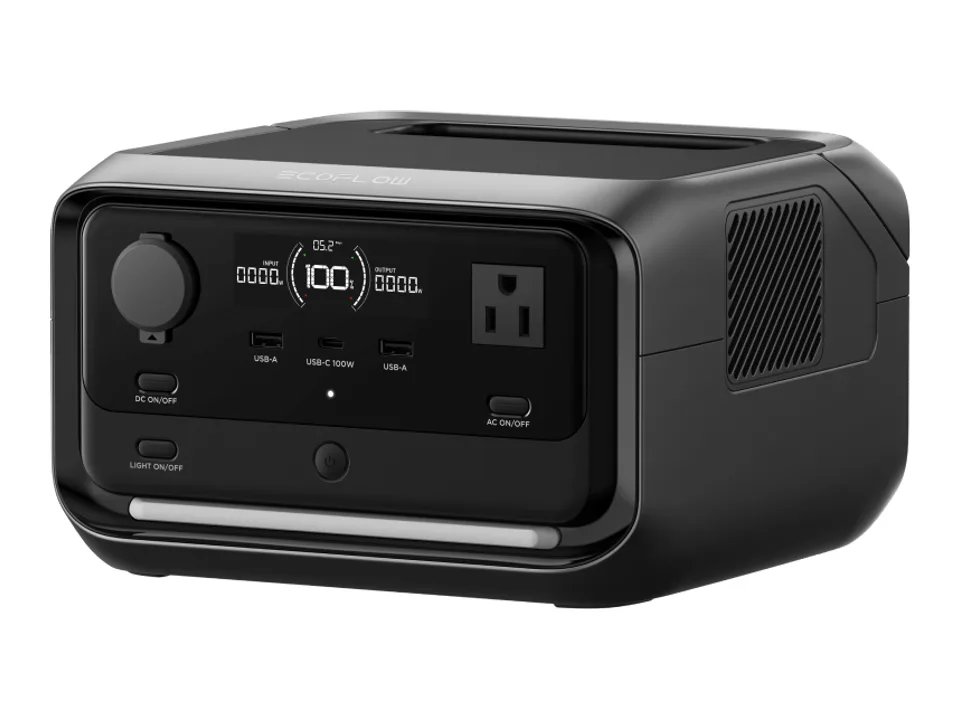
EcoFlow RIVER 3 Plus Portable Power Station
A 286 Wh LiFePO4 station of 10.4 lb with a one-hour recharge, a 10 ms UPS switchover and add-on batteries up to 858 Wh.
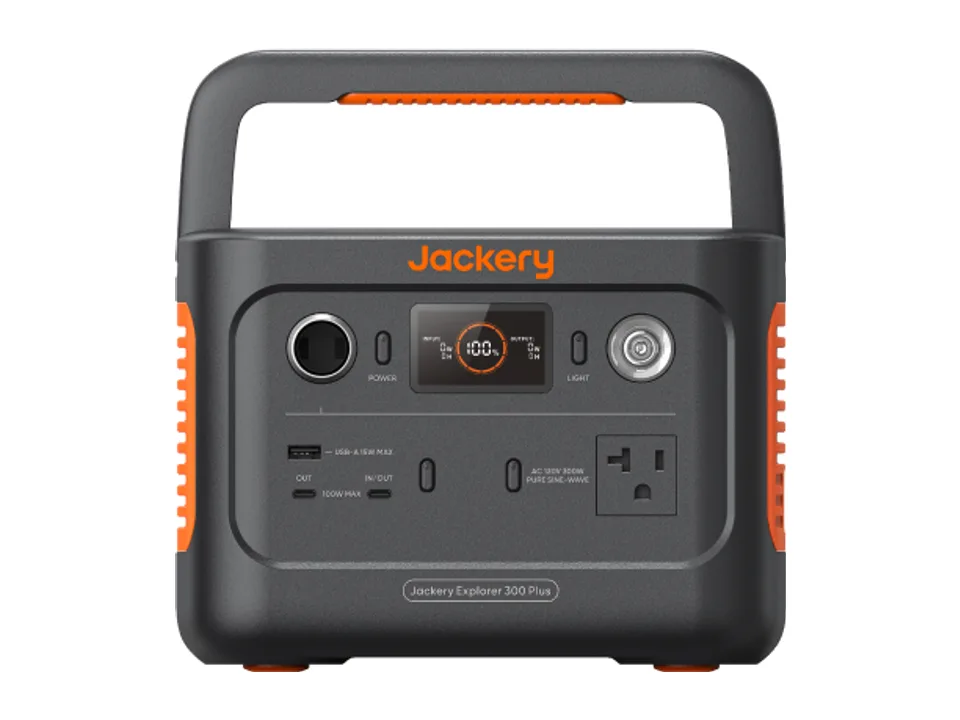
Jackery Explorer 300 Plus Portable Power Station
A 288 Wh LiFePO4 station that weighs 8.27 lb and has two USB-C ports rated up to 100 W.
Side-by-side
Specs compared
| Specification | EcoFlow RIVER 3 Plus Portable Power StationOur pick | Jackery Explorer 300 Plus Portable Power Station |
|---|---|---|
| Editorial score | Editorial score:7.9/10 | Editorial score:7.5/10 |
| Best for | Best Compact UPS | — |
| Capacity | 286 Wh | 288 Wh |
| Battery chemistry | LiFePO4 (LFP) | LiFePO4 (LFP) |
| Rated cycle life | 3,000 cycles to 80% capacity | 3,000 cycles to 80% capacity, per Jackery's US buying guide |
| AC output | 600 W | 300 W |
| Peak output | 1,200 W surge (X-Boost 1,200 W) | 600 W surge |
| USB-C output | 1 x 100 W | 2 x up to 100 W |
| Wall recharge | 0-100% in 60 minutes (380 W input) | About 2 hours |
| Max solar input | 220 W | — |
| Expandable to | 858 Wh with an EB300 or EB600 extra battery | — |
| Backup switchover | Under 10 ms | — |
| Weight | 10.4 lb | 8.27 lb (3.75 kg) |
| Dimensions | 9.2 x 9.1 x 5.8 in | — |
| Warranty | — | 3 years, plus a 2-year extension on purchases from Jackery's own website |
| Where to buy | Check Latest Price on Amazon (paid link) | Check Latest Price on Amazon (paid link) |
Scroll sideways to see both columns →
At a glance
Key differences
- 1AC output: 600 W for the EcoFlow, 300 W for the Jackery.
- 2Backup switchover: under 10 ms for the EcoFlow; Jackery publishes no figure.
- 3Expansion: up to 858 Wh for the EcoFlow; the Jackery has no expansion listed.
- 4USB-C: one 100 W port on the EcoFlow, two on the Jackery.
- 5Weight: 10.4 lb against 8.27 lb.
Product by product
Pros and cons
EcoFlow RIVER 3 Plus Portable Power Station
A small, quick-charging backup for internet gear and phones, with a battery add-on if you outgrow it. For anything above 600 W, step up to a 1 kWh station.
Pros
- Under 10 ms UPS switchover, quick enough for a router or a desktop PC
- Full recharge from the wall in an hour
- Can grow from 286 Wh to 858 Wh with an add-on battery
- 10.4 lb and small enough for a car footwell
Cons
- 600 W of AC output rules out kettles, hair dryers and most power tools
- Only one USB-C port
- 286 Wh runs a typical fridge for a few hours, not a whole day
Jackery Explorer 300 Plus Portable Power Station
A laptop-and-camera power bank with an AC outlet, not a small generator. Within that role it is light and well specified.
Pros
- 8.27 lb, light enough for a backpack or a carry-on-size bag
- Two USB-C ports rated up to 100 W for laptops
- LiFePO4 cells, the same long-life chemistry used in larger stations
Cons
- 300 W of AC output limits it to small electronics
- A 2-hour wall recharge is slower than larger stations that refill in about an hour
- Jackery's specifications say a separate adapter is required to connect a solar panel
Choose the EcoFlow RIVER 3 Plus if
- You want a small backup for a router and modem.
- You run small appliances between 300 W and 600 W.
- You might add a battery later.
Choose the Jackery Explorer 300 Plus if
- You mainly charge phones, cameras and laptops: two 100 W USB-C ports.
- Every pound counts on a hike or a bike trip.
What we could not confirm
Jackery does not list a UPS switchover time or solar input limit for the 300 Plus on the pages we read.
Frequently asked questions
- Which is better, the RIVER 3 Plus or the Explorer 300 Plus?
- For backup and small appliances, the EcoFlow RIVER 3 Plus. For charging USB-C devices on the move, the lighter Jackery.
- Can the RIVER 3 Plus be expanded?
- Yes, to 858 Wh with an EB300 or EB600 extra battery, according to EcoFlow.
- Which is lighter?
- The Jackery, at 8.27 lb against 10.4 lb.
More comparisons
VS comparison
EcoFlow DELTA 3 Plus Portable Power Station vs Anker SOLIX C1000 Gen 2 Portable Power Station
Both store about 1 kWh in LFP cells rated for 4,000 cycles. The Anker puts out more power and charges faster from the wall; the EcoFlow takes twice the solar and can grow to 5 kWh.
Updated October 15, 2026
VS comparison
EcoFlow DELTA 3 Plus Portable Power Station vs EcoFlow DELTA 2 Portable Power Station
Same capacity, same 1,800 W of AC output. The DELTA 3 Plus is the newer design, with longer-rated cells, double the solar input and faster USB-C.
Updated October 15, 2026
VS comparison
Anker SOLIX C1000 Gen 2 Portable Power Station vs Anker SOLIX C1000 Portable Power Station
The Gen 2 is lighter, more powerful and longer-rated. The original C1000 keeps one advantage: it can take an expansion battery.
Updated October 15, 2026