Best of · Portable Power Stations
Best Portable Power Stations for Camping
Five stations for tents, vans and overlanding, from a 288 Wh pack under 9 lb to a 1 kWh station that refills from solar in a day.
By Watt Versus Editorial· Updated · 5 picks
This page was drafted with AI assistance from manufacturers' specs and manuals, and is checked by our editor.
The short list
| # | Product | Key feature | Pros / Cons | Buy |
|---|---|---|---|---|
| 1 | EcoFlow DELTA 3 Plus Portable Power StationBest OverallEditorial score:8.8/10 | A 1,024 Wh LiFePO4 station with 1,800 W of AC output, a 56-minute wall recharge, 1,000 W of solar input and room to grow to 5 kWh. |
| View on Amazon (paid link) |
| 2 | Jackery Explorer 1000 v2 Portable Power StationLightest 1 kWh StationEditorial score:8.1/10 | A 1,070 Wh LiFePO4 station with 1,500 W of AC output, a one-hour emergency recharge and the lowest weight in its class. |
| View on Amazon (paid link) |
| 3 | BLUETTI Elite 100 V2 Portable Power StationBest for Solar CampingEditorial score:8.4/10 | A compact 1,024 Wh LiFePO4 station with 1,800 W of AC output, 1,000 W of solar input and a 10 ms UPS switchover. |
| View on Amazon (paid link) |
| 4 | EcoFlow RIVER 3 Plus Portable Power StationBest for Weekend TripsEditorial score:7.9/10 | A 286 Wh LiFePO4 station of 10.4 lb with a one-hour recharge, a 10 ms UPS switchover and add-on batteries up to 858 Wh. |
| View on Amazon (paid link) |
| 5 | Jackery Explorer 300 Plus Portable Power StationMost PortableEditorial score:7.5/10 | A 288 Wh LiFePO4 station that weighs 8.27 lb and has two USB-C ports rated up to 100 W. |
| View on Amazon (paid link) |
How we picked
For camping, weight and solar input matter more than raw output. Every pick here uses LiFePO4 cells, so it will last for years of trips, and we ranked them on the figures each manufacturer publishes: capacity against weight, how much solar each accepts, and how fast it refills from a wall or car before you leave.
How big a station do you need?
Add up what you will run in a day. A 12 V camping fridge, lights and phone charging usually fit within 300 to 600 Wh a day, which a 1 kWh station covers for a weekend without sun. Our watt-hour guide walks through the sums.
Our picks in detail
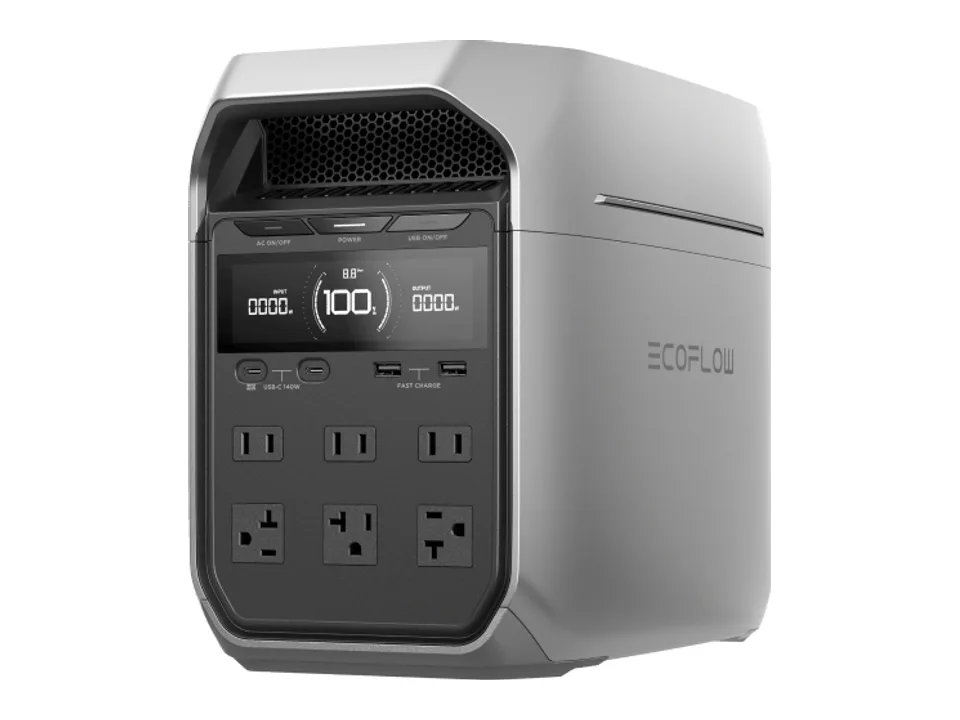
EcoFlow DELTA 3 Plus Portable Power Station
EcoFlow · DELTA 3 Plus
1,024 Wh, 1,000 W of solar input and a 56-minute wall recharge: the most complete 1 kWh station we cover, and it can grow to 5 kWh for longer trips.
- Capacity
- 1,024 Wh
- Battery chemistry
- LiFePO4 (LFP)
- Rated cycle life
- 4,000 cycles to 80% capacity
- AC output
- 1,800 W (2,200 W with X-Boost)
- Peak output
- 3,600 W surge
- AC outlets
- 6 (US model)
Pros
- 4,000-cycle LFP rating, a step up from the DELTA 2's 3,000
- Full recharge from a wall outlet in 56 minutes, by EcoFlow's figures
- 1,000 W of solar input, double the DELTA 2
- Two 140 W USB-C ports charge most laptops at full speed
Cons
- At 27.6 lb it is heavier than the Jackery Explorer 1000 v2 and Anker SOLIX C1000 Gen 2
- Reaching 5 kWh needs extra batteries, sold separately
- X-Boost runs high-wattage heaters and kettles at reduced power, not at their full rating
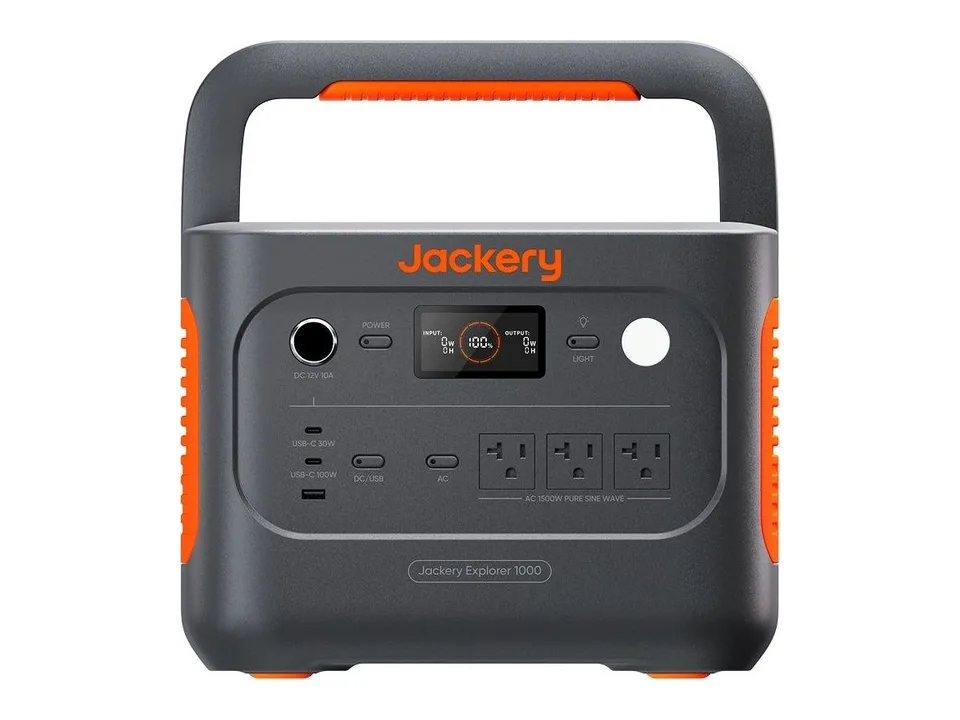
Jackery Explorer 1000 v2 Portable Power Station
Jackery · Explorer 1000 v2 (JE-1000D)
At 23.8 lb it is the easiest 1 kWh station to carry from the car to the site, and it refills in about an hour in Emergency Super Charging mode.
- Capacity
- 1,070 Wh
- Battery chemistry
- LiFePO4 (LFP)
- Rated cycle life
- 4,000 cycles to 70% capacity
- AC output
- 1,500 W
- Peak output
- 3,000 W surge
- USB-C output
- 2 x up to 100 W
Pros
- 23.8 lb, the lightest 1 kWh station we cover
- Slightly more capacity than the 1,024 Wh rivals
- One-hour recharge in Emergency Super Charging mode
- Two 100 W USB-C ports
Cons
- 1,500 W of AC output is the lowest of the 1 kWh group
- Cycle life is rated to 70% capacity, where EcoFlow and Anker rate theirs to 80%
- Not expandable
- The extra two years of warranty apply only when bought from Jackery directly, not from Amazon
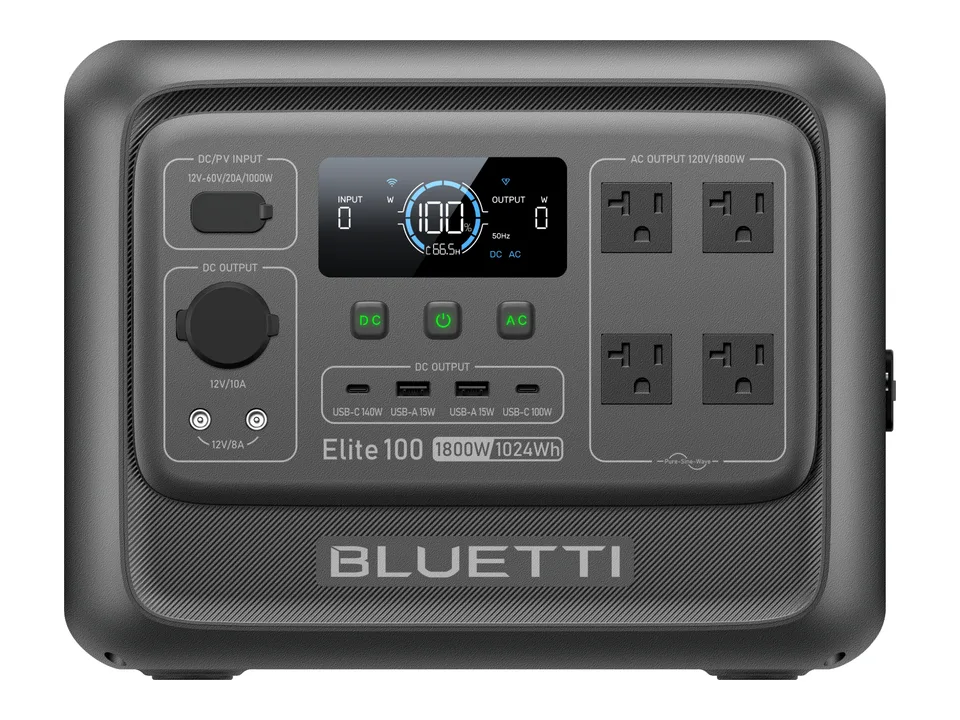
BLUETTI Elite 100 V2 Portable Power Station
BLUETTI · Elite 100 V2
1,000 W of solar input in a 25.3 lb body, with 140 W and 100 W USB-C ports for laptops and cameras.
- Capacity
- 1,024 Wh
- Battery chemistry
- LiFePO4 (LFP)
- Rated cycle life
- 4,000+ cycles to 80% capacity
- AC output
- 1,800 W
- Peak output
- 2,700 W in Power Lifting mode
- USB-C output
- 1 x 140 W, 1 x 100 W
Pros
- 1,000 W of solar input in a 25.3 lb body
- Two fast USB-C ports: 140 W and 100 W
- 10 ms UPS switchover
- 5-year warranty
Cons
- Combined AC and solar charging is capped at 1,200 W, so the two inputs do not add up
- Power Lifting runs heating appliances at reduced power, not at their full rating
- Wall recharge is slower than the Anker C1000 Gen 2 and EcoFlow DELTA 3 Plus
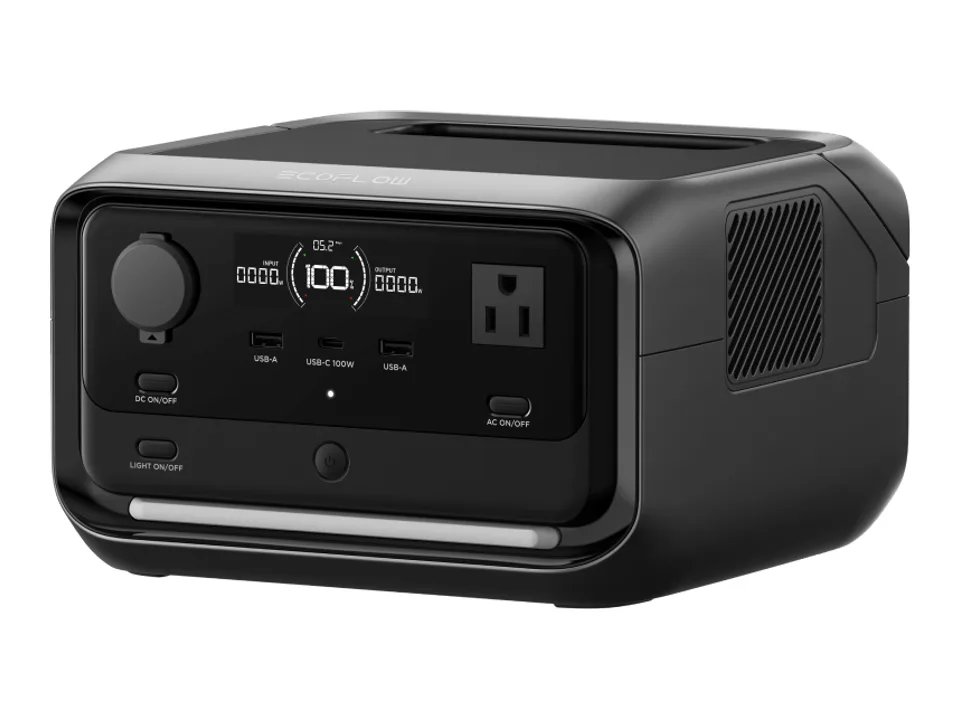
EcoFlow RIVER 3 Plus Portable Power Station
EcoFlow · RIVER 3 Plus (EF-RV-H02-1)
286 Wh in a 10.4 lb box: enough for lights and devices over a weekend, with an add-on battery up to 858 Wh.
- Capacity
- 286 Wh
- Battery chemistry
- LiFePO4 (LFP)
- Rated cycle life
- 3,000 cycles to 80% capacity
- AC output
- 600 W
- Peak output
- 1,200 W surge (X-Boost 1,200 W)
- USB-C output
- 1 x 100 W
Pros
- Under 10 ms UPS switchover, quick enough for a router or a desktop PC
- Full recharge from the wall in an hour
- Can grow from 286 Wh to 858 Wh with an add-on battery
- 10.4 lb and small enough for a car footwell
Cons
- 600 W of AC output rules out kettles, hair dryers and most power tools
- Only one USB-C port
- 286 Wh runs a typical fridge for a few hours, not a whole day
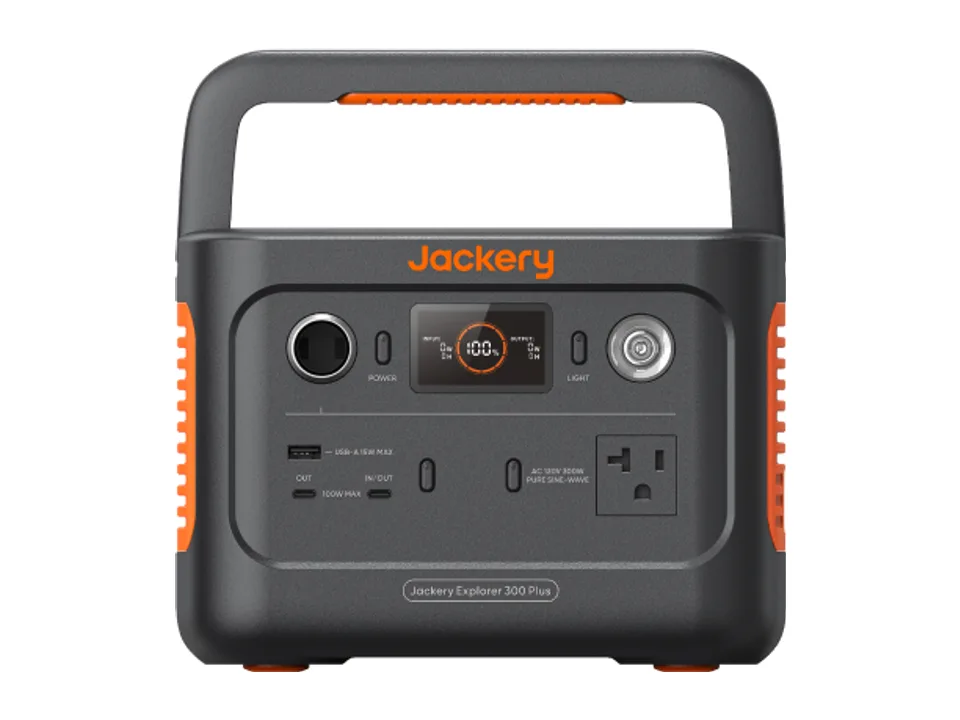
Jackery Explorer 300 Plus Portable Power Station
Jackery · Explorer 300 Plus
8.27 lb with two 100 W USB-C ports: the pick for walk-in sites, bike trips and charging cameras and drones.
- Capacity
- 288 Wh
- Battery chemistry
- LiFePO4 (LFP)
- Rated cycle life
- 3,000 cycles to 80% capacity, per Jackery's US buying guide
- AC output
- 300 W
- Peak output
- 600 W surge
- USB-C output
- 2 x up to 100 W
Pros
- 8.27 lb, light enough for a backpack or a carry-on-size bag
- Two USB-C ports rated up to 100 W for laptops
- LiFePO4 cells, the same long-life chemistry used in larger stations
Cons
- 300 W of AC output limits it to small electronics
- A 2-hour wall recharge is slower than larger stations that refill in about an hour
- Jackery's specifications say a separate adapter is required to connect a solar panel
Frequently asked questions
- What size power station do I need for camping?
- For lights, phones and a 12 V fridge, a 300-600 Wh daily budget is typical, so a 1 kWh station covers a weekend without sun. For devices only, a 300 Wh station is enough.
- Can a portable power station run a camping fridge?
- Yes. A 12 V compressor fridge draws far less than a household fridge; check its rated draw against the station's capacity, as our watt-hour guide explains.
- Are LiFePO4 power stations better for camping?
- They are rated for thousands of cycles and handle frequent charging well. Every station on this list uses LiFePO4 cells.