Best of · Portable Power Stations
Best Power Stations for Hurricane Season
When the grid is down for days, solar input matters as much as capacity. Five stations that can be recharged from panels between storms.
By Watt Versus Editorial· Updated · 5 picks
This page was drafted with AI assistance from manufacturers' specs and manuals, and is checked by our editor.
The short list
| # | Product | Key feature | Pros / Cons | Buy |
|---|---|---|---|---|
| 1 | BLUETTI AC200L Portable Power StationBest Overall for Hurricane SeasonEditorial score:8.7/10 | A 2,048 Wh LiFePO4 station with 2,400 W of AC output, 1,200 W of solar input and a 2,400 W wall-charging input. |
| View on Amazon (paid link) |
| 2 | Jackery Explorer 2000 Plus Portable Power StationMost ExpandableEditorial score:8.6/10 | A 2,042.8 Wh LiFePO4 station with 3,000 W of AC output that expands to 12 kWh with add-on battery packs. |
| View on Amazon (paid link) |
| 3 | EcoFlow DELTA 2 Max Portable Power StationBest Solar Input for Its WeightEditorial score:8.6/10 | A 2,048 Wh LiFePO4 station with 2,400 W of AC output, 1,000 W of solar input and room to expand to 6,144 Wh. |
| View on Amazon (paid link) |
| 4 | Anker SOLIX C2000 Gen 2 Portable Power StationLightest 2 kWh StationEditorial score:8.7/10 | A 2,048 Wh LiFePO4 station of 41.7 lb with 2,400 W of AC output, an RV outlet and expansion to 4 kWh. |
| View on Amazon (paid link) |
| 5 | BLUETTI Elite 100 V2 Portable Power StationBest Compact Solar StationEditorial score:8.4/10 | A compact 1,024 Wh LiFePO4 station with 1,800 W of AC output, 1,000 W of solar input and a 10 ms UPS switchover. |
| View on Amazon (paid link) |
Plan for days, not hours
After a hurricane the power can stay off for days. A station that only charges from the wall is empty by the second night. What keeps it going is solar: the BLUETTI AC200L (paid link) accepts 1,200 W of panels, the EcoFlow DELTA 2 Max (paid link) 1,000 W.
How to size it
Start with the fridge: a typical full-size model uses roughly 1 to 2 kWh a day. Add phones, lights, a fan and any medical devices. Our sizing guide walks through the sums, and the fridge guide estimates hours for your own fridge.
Before the season
Charge the station fully, test the solar panels in your yard, and keep the cables with the unit. Store it indoors and above flood level.
Our picks in detail
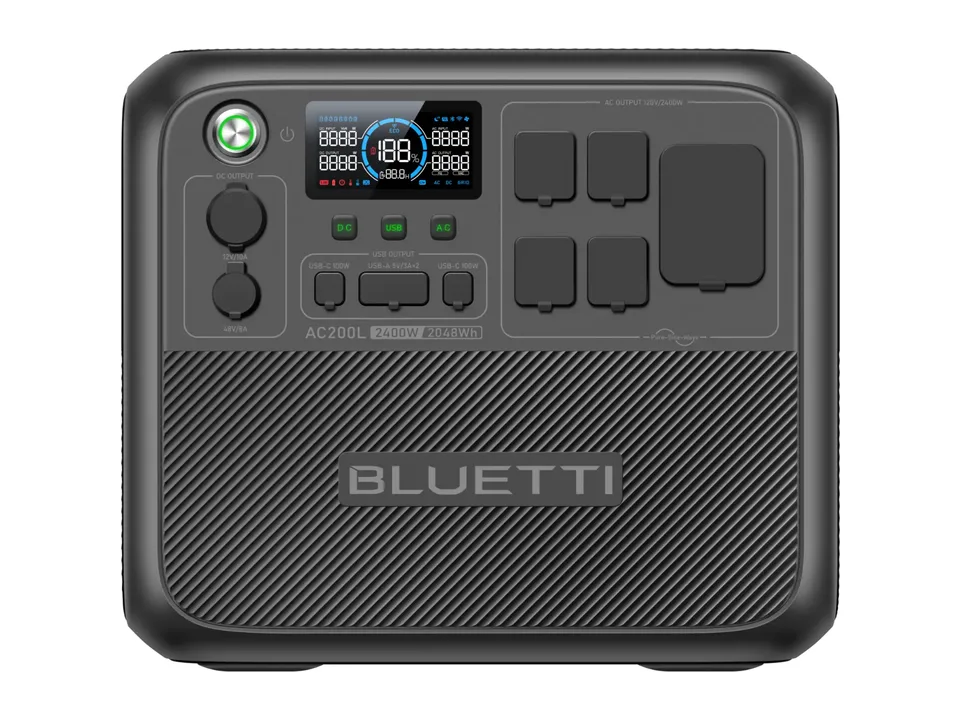
BLUETTI AC200L Portable Power Station
BLUETTI · AC200L
1,200 W of solar input and expansion to about 8 kWh.
- Capacity
- 2,048 Wh
- Battery chemistry
- LiFePO4 (LFP)
- AC output
- 2,400 W
- Peak output
- 3,600 W in Power Lifting mode
- Wall recharge
- 2,400 W AC input
- Max solar input
- 1,200 W
Pros
- 1,200 W of solar input, more than the EcoFlow DELTA 2 Max or Anker SOLIX F2000 accept
- Accepts 2,400 W from a wall outlet for fast recharging
- Expands to as much as 8,192 Wh
- Published switchover time of 20 ms or less, and a 5-year warranty
Cons
- 62.4 lb, so plan to move it rarely
- BLUETTI's own pages give two different maximum expansion figures (7,577.6 Wh and 8,192 Wh), depending on the battery used
- The 3,600 W figure is Power Lifting mode for heating appliances, not a surge rating for motors
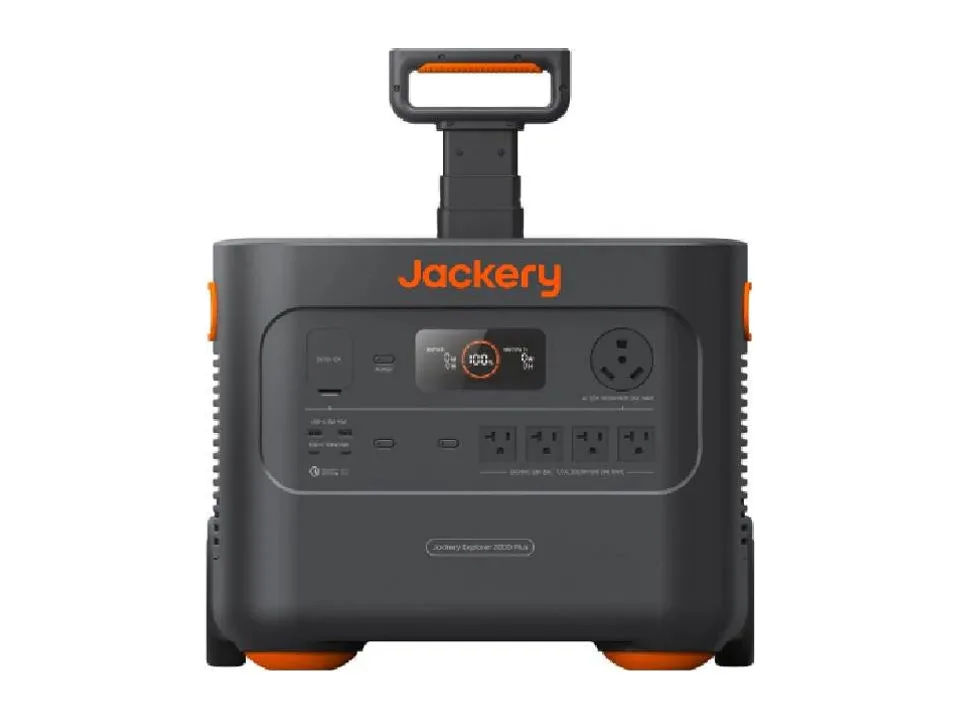
Jackery Explorer 2000 Plus Portable Power Station
Jackery · Explorer 2000 Plus
Expands to 12 kWh and takes up to six 200 W panels, by Jackery's figures.
- Capacity
- 2,042.8 Wh
- Battery chemistry
- LiFePO4 (LFP)
- AC output
- 3,000 W
- Peak output
- 6,000 W surge
- Wall recharge
- Under 2 hours, per Jackery
- Max solar input
- Up to six 200 W panels; about 2 hours to full, per Jackery
Pros
- 3,000 W of continuous output, the highest of the 2 kWh models we cover
- Expands to 12 kWh with up to five add-on packs
- Jackery says six 200 W panels can refill it in about 2 hours
Cons
- 61.5 lb before you add any battery packs
- The 2-year warranty extension is applied automatically only to purchases from Jackery's website; elsewhere, check the terms
- Jackery's pages give different wall-charging times for this model
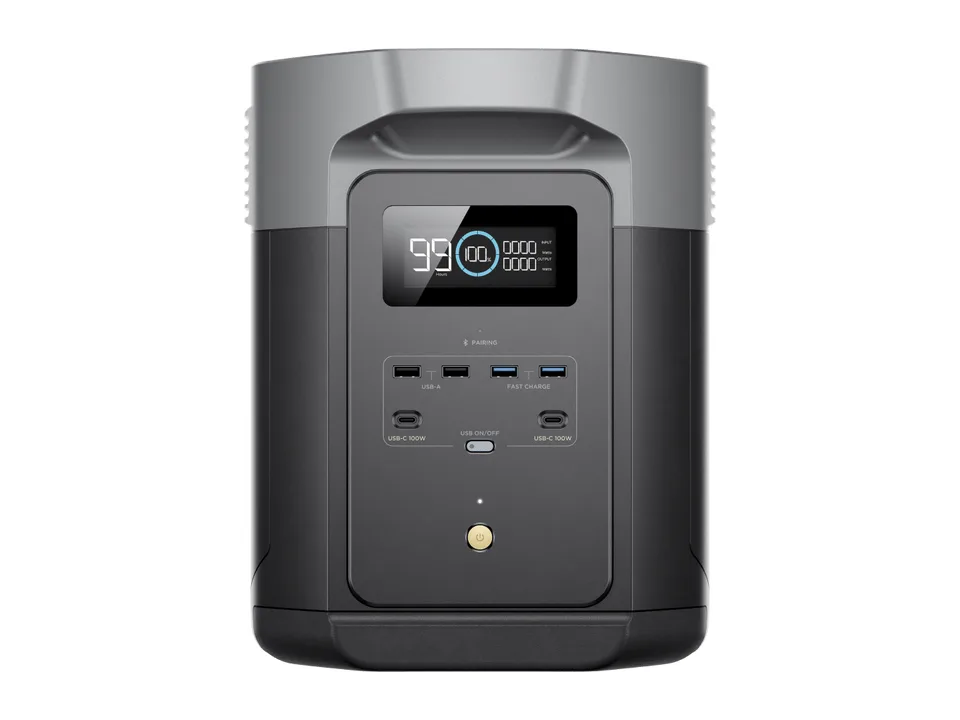
EcoFlow DELTA 2 Max Portable Power Station
EcoFlow · DELTA 2 Max
1,000 W of solar input in a 50 lb station that expands to 6,144 Wh.
- Capacity
- 2,048 Wh
- Battery chemistry
- LiFePO4 (LFP)
- Rated cycle life
- 3,000+ cycles to 80% capacity
- AC output
- 2,400 W
- Peak output
- 4,800 W surge
- AC outlets
- 6
Pros
- Six AC outlets and 2,400 W of continuous output
- Accepts up to 1,000 W of solar, which EcoFlow says can refill it in as little as 2.3 hours
- Expands to 6,144 Wh with two extra batteries
- LiFePO4 cells rated for 3,000+ cycles, with a 5-year warranty
Cons
- At 50 lb it is a two-hand lift, not something to carry far
- Expansion works only with EcoFlow's own DELTA 2 Max Smart Extra Batteries
- We could not find a backup switchover time in EcoFlow's published specifications
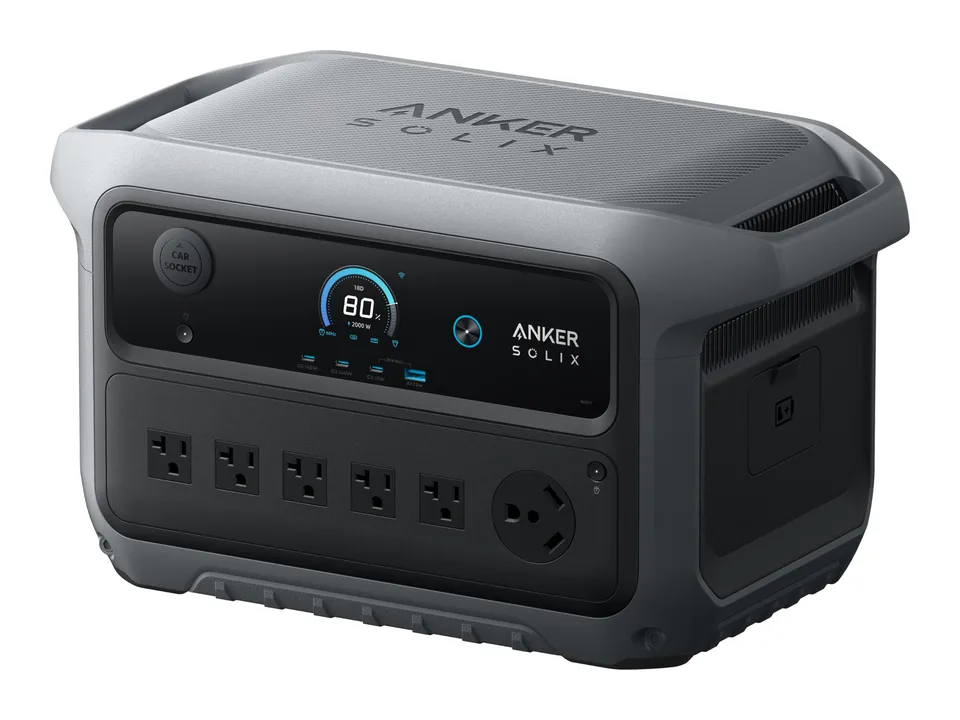
Anker SOLIX C2000 Gen 2 Portable Power Station
Anker · SOLIX C2000 Gen 2 (A1783)
41.7 lb with 800 W of solar input and a 10 ms switchover.
- Capacity
- 2,048 Wh
- Battery chemistry
- LiFePO4 (LFP)
- Rated cycle life
- 4,000 cycles to 80% capacity (US page)
- AC output
- 2,400 W
- Peak output
- 4,000 W
- AC outlets
- Includes one NEMA 5-20R and one TT-30R RV outlet
Pros
- 41.7 lb: the lightest 2 kWh station we cover, by about 8 lb
- TT-30R outlet plugs straight into an RV's 30 A inlet
- Two 140 W USB-C ports
- Expands to about 4 kWh with one add-on battery
Cons
- 800 W of solar input is the lowest in the 2 kWh group
- Expansion stops at one extra battery, where Jackery's Explorer 2000 Plus reaches 12 kWh
- Anker's regional pages disagree on whether 4,000 cycles is to 80% or 70% capacity
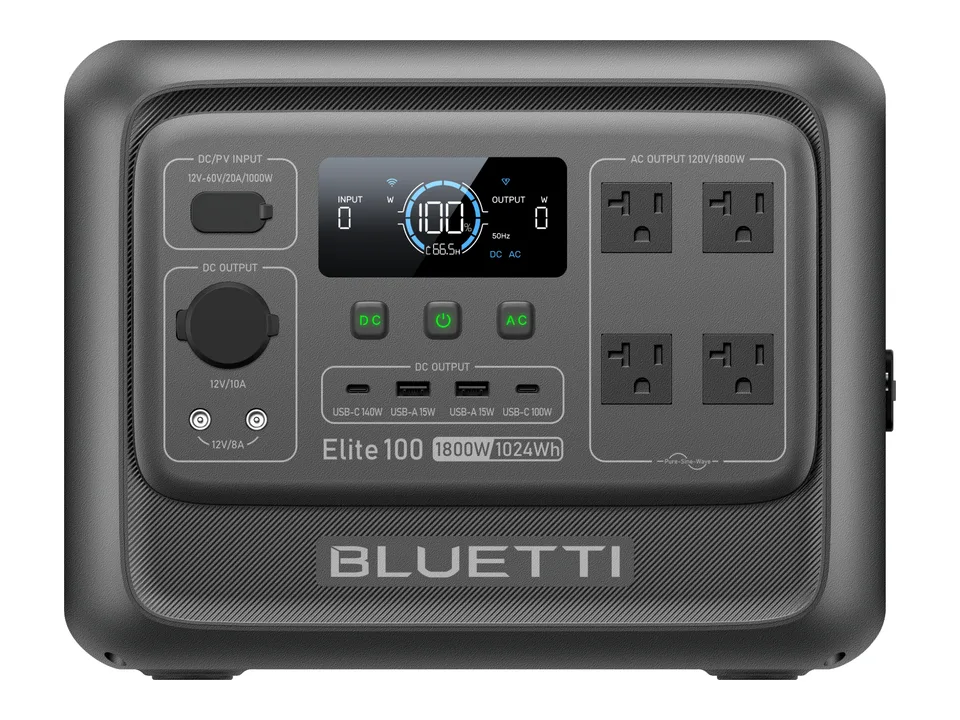
BLUETTI Elite 100 V2 Portable Power Station
BLUETTI · Elite 100 V2
1,000 W of solar input in a 25.3 lb, 1,024 Wh station.
- Capacity
- 1,024 Wh
- Battery chemistry
- LiFePO4 (LFP)
- Rated cycle life
- 4,000+ cycles to 80% capacity
- AC output
- 1,800 W
- Peak output
- 2,700 W in Power Lifting mode
- USB-C output
- 1 x 140 W, 1 x 100 W
Pros
- 1,000 W of solar input in a 25.3 lb body
- Two fast USB-C ports: 140 W and 100 W
- 10 ms UPS switchover
- 5-year warranty
Cons
- Combined AC and solar charging is capped at 1,200 W, so the two inputs do not add up
- Power Lifting runs heating appliances at reduced power, not at their full rating
- Wall recharge is slower than the Anker C1000 Gen 2 and EcoFlow DELTA 3 Plus
Frequently asked questions
- How big a power station do I need for a hurricane?
- For a fridge plus essentials over several days, a 2 kWh station with solar input or expansion batteries. A typical full-size fridge uses roughly 1 to 2 kWh a day.
- Can I recharge a power station with solar after a hurricane?
- Yes. Every pick here accepts solar panels; the BLUETTI AC200L takes the most, at 1,200 W.
- Where should I store a power station during hurricane season?
- Indoors, charged, and above any likely flood level, with its cables and panels kept together.